
Contents
JFM Rapids

Post-breakthrough evolution of viscous fingering in micromodel porous media
-
- Published online by Cambridge University Press:
- 02 September 2026, R1
-
- Article
-
- You have access
- HTML
- Export citation
-
When a less viscous fluid displaces a more viscous one in a porous medium, the interface becomes unstable, forming viscous fingers. While viscous fingering has been studied in depth, previous work has focused on the pre-breakthrough dynamics – that is, before the injected fluid reaches any outlet boundary. Here, we investigate post-breakthrough behaviour in a radial micromodel through experiments and pore-network simulations. Post-breakthrough displacement is key for practical applications, as it governs how much of the defending fluid is ultimately recovered. We show that the displacement pattern either ‘freezes’ or continues to grow, depending on the capillary number
 $ \textit{Ca}$ and viscosity ratio
 $M$. A pore-network model predicts a sharp drop in growth rate at breakthrough and a geometry-controlled cross-over
 $ \textit{Ca}_\times$ below which the displacement pattern is arrested. These results highlight the role of domain size, pore geometry, fluid properties and injection rate in regulating the post-breakthrough dynamics and provide a framework for optimising displacement efficiency.


Integral relations for the skin-friction coefficients and other quantities of annular flows
-
- Published online by Cambridge University Press:
- 02 September 2026, R2
-
- Article
-
- You have access
- Open access
- HTML
- Export citation

Thermal convection in one, two, three and four dimensions
-
- Published online by Cambridge University Press:
- 01 September 2026, R3
-
- Article
-
- You have access
- Open access
- HTML
- Export citation
JFM Papers

Interfacial instabilities and thermo-hydrodynamic mechanisms in high-temperature vapour-ventilated supercavitation
-
- Published online by Cambridge University Press:
- 01 September 2026, A1
-
- Article
-
- You have access
- HTML
- Export citation

The effects of aspect ratio on flow states and heat transport in vertical convection
-
- Published online by Cambridge University Press:
- 01 September 2026, A2
-
- Article
-
- You have access
- HTML
- Export citation
-
We present direct numerical simulations of two-dimensional vertical convection (VC) to investigate how the aspect ratio
 $A$ influences the evolution of flow states and heat transport. The study covers a Rayleigh number range of
 $10^{7}\le \textit{Ra}_H \le 10^{11}$ at a fixed Prandtl number of
 $\textit{Pr}=1$ with
 $A$ varying in the range of
 $1/50\le A \le 8$. It is found that, for a fixed value of
 $A$, the flow evolves from steady convection to periodic oscillations, chaotic flows and finally turbulence as
 $\textit{Ra}_H$ increases. At fixed
 $\textit{Ra}_H$, increasing
 $A$ induces a similar sequence of transitions, demonstrating that geometric confinement plays an important role in determining the dynamical state of the system. A flow regime diagram in the
 $(\textit{Ra}_H, A)$ space shows that the critical Rayleigh numbers for these transitions all follow approximately
 $\textit{Ra}_{H,c}\sim A^{-3}$. The flow develops a stably stratified bulk, whose normalised mean vertical temperature gradient
 $S$ varies non-monotonically with
 $A$. The geometric confinement also significantly affects the transport. The Nusselt number
 $\textit{Nu}_H$ varies non-monotonically with
 $A$ and reaches a maximum at an optimal aspect ratio
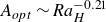 $A_{opt}\sim \textit{Ra}_H^{-0.21}$. In contrast, the Reynolds number
 $Re_H$ increases monotonically with
 $A$ and exhibits a crossover in its
 $\textit{Ra}_H$ scaling at
 $A_c\sim \textit{Ra}_H^{-0.22}$. Finally, we demonstrate that the plate height
 $L$ provides a more appropriate length scale. Using
 $L$-based non-dimensionalisation collapses the transport data across a wide range of
 $A$ onto universal scaling laws, i.e.
 $\textit{Nu}_L=0.16\textit{Ra}_L^{0.28}$ and
 $\textit{Re}_L=0.30\textit{Ra}_L^{0.49}$, and renders the transition thresholds
 $\textit{Ra}_{L,c}$ nearly independent of
 $A$. This universality indicates that the transport and flow destabilisation are governed primarily by the development of the boundary layers along the vertical walls in VC.


Global linear stability analysis framework for supercritical fluid flows
-
- Published online by Cambridge University Press:
- 01 September 2026, A3
-
- Article
-
- You have access
- HTML
- Export citation
-
Supercritical fluid flows exhibit complex dynamics and stability characteristics because of drastic thermophysical property variations across the pseudo-boiling line. Conventional stability analysis methods, primarily developed for ideal gases at low pressures, cannot be directly applied to supercritical flows. The present study establishes a unified framework of global linear stability analysis (GLSA) suitable for supercritical fluid flows for the first time. The framework incorporates real-fluid effects in terms of a cubic equation of state and detailed treatment of thermodynamic and transport properties, and integrates both energy and species transport equations into the linearised governing equations. For demonstration, the developed GLSA framework is implemented to examine the stability characteristics of jets in crossflow at different supercritical pressures and momentum flux ratios (
 $J$). Global linear stability analysis provides quantitative assessments of growth rates of dynamical events by recognising large eigenvalues and associated eigenmodes. The results show that the real-fluid modification is critical to accurately capture the growth rate magnitude of unstable modes. At low supercritical pressure, the position of the dominant GLSA eigenmode shifts from near the nozzle exit to farther downstream, accompanied by a significant reduction in growth rate magnitude. This shift is in alignment with the transition from global to convective instability in the jet upstream shear layer, where the Rayleigh–Taylor instability is enhanced owing to a pronounced density gradient. Furthermore, the GLSA eigenvalue spectrum quantifies the distinction in stability characteristics induced by the real-fluid effect even under identical
 $J$. The novel real-fluid algorithm can be extended to the stability analysis of many other supercritical fluid flows.


Scale effects on the evolution of embedded synthetic streamwise vortices in turbulent boundary layers
-
- Published online by Cambridge University Press:
- 01 September 2026, A4
-
- Article
-
- You have access
- Open access
- HTML
- Export citation
-
Low-friction-Reynolds-number (
 $ \textit{Re}_\tau \approx 235 {-} 300$ and
 $ \textit{Re}_\tau \approx 400 {-} 480$) turbulent boundary layers (TBLs) perturbed by small, mesoscale and relatively large synthetic streamwise vortices are investigated using planar particle image velocimetry (PIV) measurements and wall-resolved large-eddy simulation (LES). To better understand how these varying size streamwise vortices evolve in TBLs, synthetic streamwise vortex pairs are generated from a family of geometrically self-similar miniature vortex generators of viscous-scaled heights
 $h^+ \approx 24, 48, 96$ in experiments and
 $h^+ \approx 24, 30, 48$ in simulations. Analyses employing a triple decomposition of velocity found that the wall-normal domains of influence of these vortices are distinct and show dependence on the wall-normal peak location of the primary Reynolds shear stress component. It is found that the evolution of the synthetic vortices in TBLs is scale-dependent and characterised by the interplay between the positive (momentum source) and negative (momentum sink) components of the turbulent inertia, and additional inertia induced by the vortices. The ratio of the gradient of the viscous stress (of a canonical TBL) to the turbulent inertia acts as a diagnostic for estimating the wall-normal domain of influence of the synthetic vortices. Analyses of wall-normal domains of influence suggest that synthetic vortices of sufficient size ‘escape’ from the near-wall region. This scale effect on the evolution of embedded streamwise vortices is closely connected to the spread of time-invariant spatial fluctuations associated with secondary flows in TBLs. Estimation of the ‘escape’ scale provides insights into how the near-field mean dynamics of these vortices is related to their resulting dynamical signatures in the far field.

Vortex-induced vibration forever of an extreme-light cylinder in an unsteady wake
-
- Published online by Cambridge University Press:
- 01 September 2026, A5
-
- Article
-
- You have access
- HTML
- Export citation
-
Vortex-induced vibration forever (VIVF) is classically associated with a single elastically mounted cylinder, for which oscillations persist at infinite reduced velocity when the mass ratio (
 $m^*$) falls below a critical value (
 $m_{cr}^*$). The existence and characteristics of such permanent vibration under unsteady wake conditions remain unclear. This study investigates the vibration response of an extreme-light cylinder placed in the wake of an upstream fixed cylinder without restoring forces, with particular emphasis on the existence and variation of a critical mass ratio
 $m_{cr}^*$ with the spacing ratio (
 $L/D$). The Reynolds number is set to 60, the mass ratio
 $m^*$ ranges from 0.2 to 14 and the spacing ratio
 $L/D$ ranges from 1.1 to 6.0. Three vibration regimes are identified in the
 $(L/D,\, m^*)$ parameter space: non-vibration (NV), limited-range vibration (LRV) and infinite-range vibration (IRV). A critical mass ratio
 $m_{cr}^*$ emerges at the LRV–NV boundary, where the vibration amplitude continuously diminishes to zero as
 $m^*$ approaches
 $m_{cr}^*$, in contrast to the abrupt transition observed in single-cylinder VIVF; this extinction coincides with the disappearance of the second-order flow mode. Furthermore,
 $m_{cr}^*$ is governed by the spacing ratio relative to the vortex formation length
 $L_{\!f}/D$ of a stationary cylinder: when
 $L/D \lt L_{\!f}/D$,
 $m_{cr}^*$ increases with
 $L/D$, whereas for
 $L/D \gt L_{\!f}/D$, it decreases with further increase in
 $L/D$. In contrast, within the IRV regime the flow maintains persistent co-shedding behaviour and no critical mass ratio is observed within the investigated
 $m^*$ range, indicating that wake interference reshapes the stability boundary of the system.


Turbulent flow and drag reduction over discontinuous slip boundaries
-
- Published online by Cambridge University Press:
- 01 September 2026, A6
-
- Article
-
- You have access
- HTML
- Export citation
-
Direct numerical simulations are performed to investigate the effects of discontinuous slip boundaries comprising alternating slip regions and transverse no-slip stripes on turbulent channel flow and drag reduction mechanisms. Compared with a continuous slip boundary with the same effective slip length, the discontinuous configuration yields a substantially lower net drag reduction. This degradation is attributed to a diminished slip contribution resulting from the triple effects of slip area deficit, localised flow-field re-equilibration and inter-stripe interference, coupled with variations in the turbulence-modulation contribution and an intensified dispersive penalty. The no-slip stripes generate local adverse pressure gradients and induce shear-layer instabilities, triggering the development of internal boundary layers at the leading and trailing edges. This boundary-layer re-equilibration process manifests as a characteristic ‘oscillation-overshoot-decay recovery’ in the wall velocity gradient. Simultaneously, the no-slip stripes enhance turbulent kinetic energy production in the buffer layer and intensify wall-normal transport. While variations in the no-slip stripe geometries mainly affect drag reduction through the slip component and become dynamically important when the pitch
 $\lambda$ is sufficiently small, slip anisotropy offers a more robust mitigation strategy. By suppressing spanwise slip, the lateral motions amplified by no-slip stripes are effectively blocked, rendering the boundary layer insensitive to stripe-induced localised disturbances. This mechanism enables streamwise-slip-dominant discontinuous boundaries to achieve drag reduction performance that significantly surpasses that of isotropic or spanwise-slip-dominant configurations.


Wettability-induced asymmetry in interfacial particle trapping in turbulent oil–water emulsions
-
- Published online by Cambridge University Press:
- 01 September 2026, A7
-
- Article
-
- You have access
- Open access
- HTML
- Export citation

Physics-constrained machine learning for generalisable turbulence modelling across flow regimes
-
- Published online by Cambridge University Press:
- 01 September 2026, A8
-
- Article
-
- You have access
- HTML
- Export citation

Hydrodynamic interactions characterise active rheology of soft microswimmer suspensions
-
- Published online by Cambridge University Press:
- 01 September 2026, A9
-
- Article
-
- You have access
- Open access
- HTML
- Export citation

Universal energy spectrum in decaying quasi-two-dimensional turbulence
-
- Published online by Cambridge University Press:
- 01 September 2026, A10
-
- Article
-
- You have access
- HTML
- Export citation
-
We study experimentally the time evolution of energy and its spectrum in decaying quasi-two-dimensional (quasi-2-D) turbulence with different damping rates
 $\gamma$. The thin-layer fluid flow is forced electromagnetically and decays freely after cessation of the forcing. We found that energy does not exhibit an exponential decay associated with linear damping, but an algebraic decay which can be described by a quadratic drag model. This represents the first experimental evidence of the quadratic drag in (quasi-) 2-D turbulence. The energy spectrum
 $E(k)$ undergoes two decay stages. In the initial stage, the shape of
 $E(k)$ changes with time and is notably dependent on
 $\gamma$. In the late stage,
 $E(k)$ evolves in a self-preserving manner and exhibits an unexpected universal form that is independent of
 $\gamma$. This universal spectrum is characterised by a dual scaling: a
 $k^{-3}$ scaling at large scales and
 $k^{-5/3}$ at small scales, exhibiting remarkable similarity with the Nastrom–Gage spectrum in atmospheric flows. The
 $k^{-3}$ scaling is found to be associated with an inverse energy transfer, while
 $k^{-5/3}$ may be attributed to the enhancement of forward energy transfers after the removal of body force that suppresses the three-dimensional motions at small scales. The profile of inverse energy flux is shifted to larger scales during decay, resulting in further growth of turbulent structures.


Lagrangian dynamics and spatial distribution of particles in rotating turbulence
-
- Published online by Cambridge University Press:
- 04 September 2026, A11
-
- Article
-
- You have access
- Open access
- HTML
- Export citation

Localised particle clustering triggers periodic leakage in a counter-rotating vortex pair
-
- Published online by Cambridge University Press:
- 04 September 2026, A12
-
- Article
-
- You have access
- HTML
- Export citation
-
Multiscale vortex structures significantly influence inertial particle dynamics, contributing to clustering in turbulent flows – a phenomenon common in many applications. In this study, our primary objective is to investigate how particle clustering is influenced by vortex effects while accounting for particle feedback. Using a two-way coupled numerical method, we identify novel particle dynamics characteristics, as localised particle clustering triggers periodic leakage, even in a dilute particle-laden unequal-strength counter-rotating vortex pair (CVP). Small, heavy, dilute inertial particles are considered. In particular, the initial particle volume fraction and the particle Stokes number are set to
 $\varPhi _{p,0}\lt 1.0\times 10^{-3}$ and
 ${\textit{St}}\in (0,0.1)$, respectively. The particle dynamics is governed by two critical Stokes numbers: the trapping critical Stokes number
 ${\textit{St}}_{\textit{cr,t}}$ and the stability critical Stokes number
 ${\textit{St}}_{\textit{cr,s}}$. The critical Stokes number
 ${\textit{St}}_{\textit{cr,t}}$ governs particle trapping. For
 ${\textit{St}} \lt {\textit{St}}_{\textit{cr,t}}$, particles are trapped, forming a localised particle clustering ring (PCR) that induces substantial particle feedback on the flow. Furthermore,
 ${\textit{St}}_{\textit{cr,s}}$ determines the stability of the PCR, which varies with
 $\varPhi _{p,0}$. A stable PCR forms when
 ${\textit{St}} \lt {\textit{St}}_{\textit{cr,s}}$. At
 ${\textit{St}}_{\textit{cr,s}} \lt St \lt {\textit{St}}_{\textit{cr,t}}$, a PCR forms and then periodic temporal leakage of particles occurs. The significant feedback from the PCR creates a morphologically similar positive vorticity region (PVR) through the baroclinic source. The periodic transport of vorticity within the PVR modulates the critical streamlines
 $S_{\textit{max}}$ and
 $S_0$, which play decisive roles in particle trapping. These modulations directly reduce the stable region of the PCR and displace its location, enabling particles to escape.


A novel multiscale model for the haemodynamics in retinal microcirculation with an analytic solution for the capillary–tissue coupled system
-
- Published online by Cambridge University Press:
- 04 September 2026, A13
-
- Article
-
- You have access
- HTML
- Export citation

A new receptivity mechanism for the second-mode instability in hypersonic boundary layers
-
- Published online by Cambridge University Press:
- 04 September 2026, A14
-
- Article
-
- You have access
- Open access
- HTML
- Export citation

Direct time-domain eduction of acoustic liner impedance in turbulent grazing flows
-
- Published online by Cambridge University Press:
- 04 September 2026, A15
-
- Article
-
- You have access
- Open access
- HTML
- Export citation

Spanwise twisting optimises flapping wing propulsive efficiency through force reallocation and the leading-edge vortex growth regulation
-
- Published online by Cambridge University Press:
- 03 September 2026, A16
-
- Article
-
- You have access
- HTML
- Export citation
-
This work investigates how spanwise twisting modulates aerodynamic performance and leading-edge vortex (LEV) dynamics of a low aspect-ratio (AR) flapping wing through variations in effective angle of attack (
 $\alpha _{\textit{eff}}$). Spanwise twisting primarily redistributes force between the streamwise and spanwise directions for a low-AR flapping wing – reallocating force orientation rather than altering total force magnitude – thereby directly governing the thrust-to-resultant-force ratio and hence propulsive efficiency. At low Strouhal number, excessive
 $\alpha _{\textit{eff}}$ induces stall, while at medium-to-high Strouhal number, resultant force remains insensitive to
 $\alpha _{\textit{eff}}$ as increasing twist enhances thrust at the expense of side force. Maximum propulsive efficiency of 0.36 occurs at Strouhal number = 0.6 and
 $\alpha _{\textit{eff,max}} = 27^{\circ }$, where the resultant force is optimally oriented in the streamwise direction, maximising the thrust-to-resultant-force ratio. Circulation analysis reveals that peak efficiency corresponds to a circulation plateau during late downstroke, sustained by a secondary structure, a lambda-shaped positive vortical structure beneath the LEV, that regulates the LEV growth. This mechanism is absent at both excessively low and high
 $\alpha _{\textit{eff,max}}$. Spanwise vortex variations indicate functional differentiation: inboard regions maintain attached flow for lift, while outboard regions exploit LEV dynamics for thrust. Moreover, late twisting in a flapping cycle enhances efficiency by promoting vortex shedding before the stroke reversal, whereas early twisting in a flapping cycle amplifies thrust.


Non-equilibrium structure of triple points using the 10-moment model
-
- Published online by Cambridge University Press:
- 03 September 2026, A17
-
- Article
-
- You have access
- Open access
- HTML
- Export citation