
Contents
JFM Papers

Disturbance growth analysis of pressure gradient transition flow with three-dimensional rough surfaces
-
- Published online by Cambridge University Press:
- 14 September 2026, A15
-
- Article
-
- You have access
- HTML
- Export citation

On the consistent similarity of equilibrium supersonic pressure-gradient turbulent boundary layers over smooth and rough walls
-
- Published online by Cambridge University Press:
- 14 September 2026, A16
-
- Article
-
- You have access
- HTML
- Export citation
-
The consistent outer-layer similarity of equilibrium supersonic pressure-gradient turbulent boundary layers (PGTBLs) over smooth and rough walls, which has not been systematically explored for rough-wall configurations, is investigated using a unified similarity theory and direct numerical simulations (DNS). A unified similarity framework applicable to both wall conditions is developed, within which a compressible pressure-gradient parameter,
 $\varLambda _c$, is identified as the governing similarity parameter. The theory predicts that smooth- and rough-wall PGTBLs are self-similar when
 $\varLambda _c$ constant in the streamwise direction, and that consistent similarity between the two flows is achieved when they share the same
 $\varLambda _c$. To construct such equilibrium PGTBLs, a prediction–correction procedure is proposed to prescribe the boundary-layer edge velocity, ensuring a constant
 $\varLambda _c$ in DNS. The resulting simulations confirm collapse of outer-layer mean velocity and Reynolds-stress profiles between smooth and rough walls under matched
 $\varLambda _c$ condition. Combining theory and DNS, the similarity conditions expressed in terms of
 $\varLambda _c$ are shown to be equivalent to requiring a constant compressible Rotta–Clauser parameter
 $\beta$. Furthermore, with appropriate scaling, both mean and fluctuating temperature profiles exhibit consistent similarity, demonstrating that the outer-layer similarity extends naturally to the thermal field in supersonic PGTBLs.


The ‘step stall’ phenomenon of a supersonic Coanda jet
-
- Published online by Cambridge University Press:
- 14 September 2026, A17
-
- Article
-
- You have access
- HTML
- Export citation
-
This study presents an experimental investigation into the influence of a step on the detachment characteristics of a supersonic Coanda jet. A parametric analysis was conducted by systematically varying the Coanda surface radius, jet outlet height and step height. Flow morphology was captured using high-speed schlieren and shadowgraph visualisation, while the critical nozzle pressure ratio (
 $\textit{NPR}$) for jet detachment was precisely measured with pressure transducers. For the baseline configuration without a step, the detachment
 $\textit{NPR}$ (denoted
 $\textit{NPR}$d) was predicted by a macroscopic mechanical model balancing centrifugal force and the radial pressure gradient, confirming a power-law relationship with the geometric ratio. The introduction of a step revealed a novel ‘step stall’ phenomenon: while increasing the step height initially enhances attachment and raises
 $\textit{NPR}$d by simplifying wave structures and suppressing separation bubbles, a further increase beyond a critical optimal value causes a sharp drop in performance. This optimal step height, which maximises the detachment
 $\textit{NPR}$, is shown to have a linear relationship with the normalised Coanda radius. The phenomenon is explained by the ineffective wall–jet interaction when an excessive step height prevents the jet’s core from being effectively ‘grabbed’ by the curved surface. These findings provide critical insights and practical design guidelines for optimising the Coanda effect in advanced flow control applications.


Causal analysis of inner and outer motions in near-wall turbulence
-
- Published online by Cambridge University Press:
- 14 September 2026, A18
-
- Article
-
- You have access
- HTML
- Export citation

Inflow-shear-induced wake asymmetry links axial force oscillations to vertical wake meandering in active wake control
-
- Published online by Cambridge University Press:
- 14 September 2026, A19
-
- Article
-
- You have access
- HTML
- Export citation

Self-consistent fragmentation in dynamically dense turbulent fibre suspensions
-
- Published online by Cambridge University Press:
- 17 September 2026, A20
-
- Article
-
- You have access
- Open access
- HTML
- Export citation
-
Fragmentation of slender fibres by turbulence controls length distributions in many natural and industrial suspensions, yet most theories assume a prescribed carrier flow, and treat fibres as dilute and dynamically passive. Here, we develop a self-consistent kinetic description for fragmentation in the opposite limit of sufficiently dense fibre suspensions that back-react on the turbulence. Starting from an Euler–Bernoulli model in the quasi-static regime, we show that collective resistive-force drag defines a cut-off span
 $L_c$ inside the inertial range, marking the crossover from a Kolmogorov-like inertial range with an effective linear friction (for scales above
 $L_c$) to a fibre-dominated frictional regime with
 $E(k)\propto k^{-3}$ for scales below
 $L_c$. In this regime, the curvature amplitude of an almost straight fibre rises steeply with its span, so that the supercritical breaking hazard loses its dependence on length, and approaches a plateau controlled solely by the fibre loading. Embedding this hazard into a scale-invariant binary fragmentation equation, adopted here as a minimal quasi-static closure, we obtain, without adjustable parameters, a corresponding asymptotic steady length spectrum
 $n(L)\propto L^{-2}$ in the fibre-dominated regime, in contrast with the shallower
 $L^{-4/3}$ law predicted in the Kolmogorov-like regime. The crossover between these two spectra is set self-consistently by the same length density that fixes
 $L_c$ and the onset of the frictional modification of the cascade, thus linking turbulence modification, curvature statistics and kinetic fragmentation in a single coupled framework.


Study on the design, fabrication and drag reduction of ridge-type riblet surfaces based on the thin film buckling method
-
- Published online by Cambridge University Press:
- 17 September 2026, A21
-
- Article
-
- You have access
- HTML
- Export citation
-
Micro-riblet drag-reduction technology has been developed and applied in aerospace and marine industries to save fuel and cut costs. However, the cost-effective, straightforward and rapid fabrication of riblet surfaces remains a significant challenge. In this paper, drag-reduction surfaces are fabricated using ultraviolet (UV)-induced bending of pre-stretched polydimethylsiloxane. This study examines how substrate pre-stretching (γ) and UV exposure duration affect the ridge-riblet geometry and formation mechanisms. Furthermore, regular ridge-type riblets were fabricated, and both experimental and numerical investigations of drag reduction were conducted. The experimental data show that the ridge riblets achieve a drag-reduction rate of 6.10 % at a flow velocity of 2.5 m s−1 (
 $s^{+}\approx 16$). Our fabrication process demonstrates distinct advantages over existing drag-reduction structures while achieving comparable levels of drag reduction. We simulate the evolution of velocity, shear stress and vorticity distributions across both smooth and riblet surfaces, thereby elucidating the fundamental mechanisms underlying drag reduction. This research provides an effective method for riblet drag-reduction structure.


Interaction of internal waves impinging upon stratified turbulence
-
- Published online by Cambridge University Press:
- 16 September 2026, A22
-
- Article
-
- You have access
- Open access
- HTML
- Export citation

Broadband absorption of ocean wave energy using a graded array of heaving buoys in three dimensions
-
- Published online by Cambridge University Press:
- 16 September 2026, A23
-
- Article
-
- You have access
- Open access
- HTML
- Export citation
-
The generation of renewable power from ocean waves at a commercial scale requires arrays of wave energy converters (WECs) to be designed for efficient power capture over broad frequency bands and a wide range of incident wave directions. Here, array designs are developed in a three-dimensional model based on linear potential-flow theory, by arranging heaving-buoy-type WECs into rows, and spatially grading the resonant properties of successive rows via linear spring–damper power take-off (PTO) mechanisms. The grading leverages theories for rainbow reflection and rainbow absorption, and involves analyses of Bloch waves and pole–zero pairs in complex frequency space to inform the array layout and choice of PTO parameters. The spacing within an array alters the resonant properties of the rows and the behaviour of higher-order passbands, which has implications for the efficiency of an array. Strategies are developed to grade arrays composed of rows with infinitely many WECs, for efficient, broadband absorption over a broad target frequency range, and average absorptions exceeding
 $90\,\%$ are achieved over a wide range of wave directions. The strategies are applied to finite arrays, which demonstrate broadband absorption in directionally spread irregular sea states, and are shown to outperform the absorption of uniform arrays across a wide range of peak periods.


Alignment response time for non-spherical particles in turbulence
-
- Published online by Cambridge University Press:
- 16 September 2026, A24
-
- Article
-
- You have access
- HTML
- Export citation

Integral modelling of weakly evaporating three-dimensional liquid film with variable-substrate heating
-
- Published online by Cambridge University Press:
- 21 September 2026, A25
-
- Article
-
- You have access
- Open access
- HTML
- Export citation
-
Analysing the dynamics of phase-changing liquid films is essential for enhancing the performance of thermal-management systems. Still, direct simulation of the full governing equations is computationally expensive. To circumvent this limitation, I derived a weighted-integral boundary-layer (WIBL) model under long-wave assumptions, weak evaporation and strong surface tension, also accounting for variable-substrate heating. In the linear regime, the WIBL reproduces the growth rates and cutoff wavenumbers of unstable modes with significantly higher accuracy than commonly used Benney-type models for Reynolds number
 ${{\textit{Re}}}\lt 40$, and with accuracy comparable to that of the Orr–Sommerfeld equations. The linear analysis further reveals a threshold separating streamwise- and spanwise-dominated instabilities in hanging films, arising from the competition between the Kapitza and Rayleigh–Taylor mechanisms; the WIBL accurately predicts this threshold for small
 ${\textit{Re}}$ and inclination angles. In the nonlinear regime, with space- and time-varying substrate heating, the WIBL model captures the evolution of the free-surface thickness and temperature with an accuracy of approximately 6 % relative to the original Navier–Stokes equations. Three-dimensional simulations show that a condensing film undergoes dry out due to Kapitza instability, whereas unsteady substrate heating promotes spanwise momentum spreading, modifies wave dynamics, and prevents dry out. The WIBL model provides a good level of accuracy at a low computational cost, enabling extensive parametric studies, nonlinear-stability analyses and the design of optimal substrate-heating control strategies.


The smallest stalagmites: a hydrochemical lower bound on stalagmite radius
-
- Published online by Cambridge University Press:
- 17 September 2026, A26
-
- Article
-
- You have access
- Open access
- HTML
- Export citation

Fate of secondary droplets produced by high-speed raindrops interacting with a liquid pool
-
- Published online by Cambridge University Press:
- 17 September 2026, A27
-
- Article
-
- You have access
- Open access
- HTML
- Export citation
-
Secondary droplets produced by interactions between falling fluid drops and a liquid pool play a significant role in engineering applications and geophysical processes in nature. This study uses direct numerical simulations to investigate the dynamics of secondary droplets generated by raindrop–liquid pool interactions. The raindrop parameters feature realistic speed
 ${\sim} 7\ \mathrm{m \ s}^{-1}$, effective diameters
 ${\sim} 1$–
 $4\ \mathrm{mm}$, and surface tension values ranging from
 $25\,\%$ to twice the typical air–water interface value. The numerical configurations include both a single raindrop and two raindrops separated by distances between two and four times the raindrop diameter. The secondary droplet size distribution
 $N_d$ is found to scale with the droplet radius
 $r_s$ as
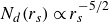 $N_d(r_s)\propto r_s^{-5/2}$, with additional dependencies on surface tension and raindrop diameter. When normalised according to this new scaling law, the droplet size distribution obtained from simulations with different parameter values collapses onto a single curve. Analysis of the impact morphology reveals distinct stages of raindrop interactions, and identifies the formation and break-up of a central liquid film. Spatial and temporal analyses of the secondary droplets show that raindrop interaction can influence both the percentage of droplets captured by the cavity and the duration over which they re-merge with the pool. These behaviours arise from the combined effects of differences in the birth times of secondary droplets of various sizes and aerodynamic forcing associated with the cavity airflow.


Reynolds-averaged closure modelling of the energy equation for compressible wall turbulence based on the
 $\boldsymbol{k-\omega}$ equations
-
- Published online by Cambridge University Press:
- 17 September 2026, A28
-
- Article
-
- You have access
- HTML
- Export citation
-
Wall cooling in hypersonic turbulent boundary layers produces an off-wall temperature maximum at which the turbulent heat flux vanishes, and the normally secondary turbulent kinetic-energy transport becomes locally important. We formulate an algebraic closure for the corresponding kinetic-energy contributions within a Reynolds-averaged
 $k-\omega$ framework. The transported variable
 $k$ remains in the turbulence equations and eddy-viscosity relation, whereas an algebraically reconstructed quantity
 $\mathcal{K}$ is used in the physical kinetic-energy terms of the momentum and energy equations. A local turbulent-Prandtl-number relation is obtained separately by regularised ensemble-Kalman inversion of two compressible-channel direct numerical simulation cases. Tests in compressible channels and zero-pressure-gradient boundary layers with free-stream Mach numbers from 2 to 14 show that the
 $\mathcal{K}$ reconstruction accounts for most of the reduction in the overpredicted temperature maximum; the new
 $\textit{Pr}_t$ relation provides a smaller but also effective additional correction, where
 $\textit{Pr}_t$ is the turbulent Prandtl number. Tests with the
 $\textit{SST}-\omega _0$ and
 $\textit{EARSM}-\omega _0$ models, where
 $ \omega_0$ denotes the Durbin–Yin reformulation,
 $\textit{SST}$ is the shear stress transport,
 $\textit{EARSM}$ is the explicit algebraic Reynolds stress model, show similar trends for the two cooled-wall boundary layers considered. The demonstrated scope is therefore limited to the attached, calorically perfect-gas wall flows examined here.


Similarity of start-up flow in porous media for large pressure gradients
-
- Published online by Cambridge University Press:
- 21 September 2026, A29
-
- Article
-
- You have access
- Open access
- HTML
- Export citation
-
We investigate start-up flow from an initially quiescent state in three ordered sphere packings (hexagonal close-packed, face-centred cubic, body-centred cubic) driven by a constant intrinsic pressure gradient using direct numerical simulation. The main finding is that the first nonlinear departure from the initial linear regime occurs at a characteristic inviscid time
 $\tau _{{inv}}=\sqrt {\rho d/\vert \boldsymbol{\nabla }\langle p\rangle _{\textit{i}}\vert }$ (where
 $\rho$,
 $d$,
 $\boldsymbol{\nabla }\langle p\rangle _{\textit{i}}$ correspond to fluid density, sphere diameter, intrinsic pressure gradient), rather than at a critical instantaneous Reynolds number. At early times, the flow consists of an irrotational outer motion and thin Stokes-type boundary layers near the solid surfaces; nonlinear effects emerge when the convective term in these boundary layers becomes comparable to the other leading-order terms. At the pore scale, the transient evolution is characterised by the growth of thin vorticity layers on the sphere surfaces, their large-scale migration into the pore space after times of order
 $\tau _{{inv}}$ and the formation of inertial cores. Despite geometric differences, these processes occur in a remarkably similar sequence across all three packings. Vorticity magnitude exhibits laminar boundary-layer scaling with the governing dimensionless parameter Hagen number, whilst in the body-centred cubic sphere pack case a transition towards turbulent-type scaling is observed. These results establish
 $\tau _{{inv}}$ as a unifying measure for the onset of nonlinearity in strongly accelerated porous media flows, with direct implications for the modelling of unsteady transport in natural and engineered systems.


Shear-free, inhomogeneous turbulence in a stably stratified fluid. Part 2. A wave–turbulence decomposition
-
- Published online by Cambridge University Press:
- 17 September 2026, A30
-
- Article
-
- You have access
- Open access
- HTML
- Export citation
-
In Hass & Lele (2026 J. Fluid Mech. 1037, A20), we looked at the statistical structure (self-similarity) and entrainment rate of a shear-free turbulent layer bounded by a net zero momentum source layer above and a stable density interface below and found agreement with oscillating grid turbulence experiments. However, interfacial waves supported by the stable stratification make quantification of variances in the near-interfacial region ambiguous. In the present paper we propose a decomposition of the fluctuating fields based on eigenmodes of the linearized equations. Evidence that a linear model is appropriate is provided by the wavenumber–frequency spectra for low Froude number simulations. Using the decomposition, a detailed analysis of the wave–turbulence statistics, including budgets of kinetic and potential energy, is conducted. An energy conversion pathway is uncovered consistent with the internal wave-breaking entrainment mechanism proposed by Hannoun & List (1988 J. Fluid Mech. 189, 211–234), Fernando & Hunt (1997 J. Fluid Mech. 347, 197–234), and McGrath et al. (1997 J. Fluid Mech. 347, 235–261). A locally defined mixing or flux coefficient
 $\varGamma =\chi /\epsilon$ scales with the (local) turbulent Froude number in the same way as in homogeneous turbulence simulations where transport is identically zero. Finally, we connect our spatially inhomogeneous simulations to the strongly stratified turbulence theory demonstrating that the parameter regime required by the theory is, in principle, accessible for sufficiently energetic forcing, but is not realized in our simulations.


Experimental study of perforated plate wakes upon starting motion
-
- Published online by Cambridge University Press:
- 18 September 2026, A31
-
- Article
-
- You have access
- HTML
- Export citation

Air–water cavity in multi-plunging jet impacts
-
- Published online by Cambridge University Press:
- 18 September 2026, A32
-
- Article
-
- You have access
- HTML
- Export citation
-
We report the formation of an original dome-shaped air–water cavity at the impact site of closely packed plunging water jets. The injector assembly consists of concentric rings of circular jets, similar to a shower-head configuration. We infer from high-speed imaging, laser-induced fluorescence and optical phase detection probes that the cavity consists of multiple stems and sheets of air that stretch, retract and pinch off to produce bubbles. We also illustrate various bubble production mechanisms in the cavity, along with coalescence and bubble breakup scenarios in the subsequent bubble cloud. Thereby, we describe the wide range of bubble sizes generated by such jets, from a few micrometres up to about
 $5$ mm. Measurements of the cavity size are carried out for varying impact velocity, number of jets and jet spacing. We propose that this distinctive air–water cavity is generated by liquid entrainment when successive rings of plunging jets progressively mix with the pool water.


Lock-in during stall flutter under parametric excitation by harmonic longitudinal gusts
-
- Published online by Cambridge University Press:
- 21 September 2026, A33
-
- Article
-
- You have access
- HTML
- Export citation

Vortex dynamics of a boundary layer disturbed by cylinder wakes: effects of the gap ratio and the relative boundary layer thickness
-
- Published online by Cambridge University Press:
- 21 September 2026, A34
-
- Article
-
- You have access
- HTML
- Export citation
-
The vortical structures in a flat-plate boundary layer disturbed by circular cylinder wakes are investigated using particle image velocimetry and hydrogen bubble visualization techniques. The cylinder diameter (D) and the gap between the cylinder and flat plate (G) are systematically varied to establish an investigated matrix of Reynolds number ReD = 530–1600, gap ratio
 $G/D$ = 0.33–6 and relative boundary layer thickness
 $\delta_0/D$ = 0.35–1.06 (δ0 is boundary layer thickness at the installation position of cylinder). An unexpected large critical value of
 $G/D$ = 4 is captured to divide the wake-vortices–boundary-layer interaction into two modes for
 $\delta_0/D$ = 1.06: the wake vortices trigger secondary vortices (SV) for
 $G/D$ ≤ 4; no secondary vortex is observed inside the boundary layer for
 $G/D$ > 4. The flow physics behind this mode switching is elaborated. An increase in
 $\delta_0/D$ is found to cause an earlier and stronger interaction for a fixed
 $G/D$. It is generally characterized by an earlier and faster growth of turbulent kinetic energy inside the boundary layer, stronger SV and a more pronounced deflection of wake vortex trajectories. The intensified interaction strengthens the mixing between the wake and boundary layer and accelerates the boundary layer transition, causing an earlier prevalence of hairpin vortex packets and a faster establishment of turbulent boundary layer. Although the interaction is simultaneously influenced by
 $G/D$ and
 $\delta_0/D$, the normalized growth rate of turbulent kinetic energy inside the boundary layer exhibits a remarkably exponential scaling with respect to
 $G/D$ during the initial stage of interaction.


